target_syncedGateway target synced
- Supports
- The Gateway accepted and stored the requested test target for the scoped device operation.
- Does not establish
- It does not prove that the iPhone is online or that the target app adopted the result.
System model · Evidence · Restore
WLOC separates browser control from device execution. Every operation has an authorized owner, a bounded target, an honest sync state, and a visible route back to normal behavior.
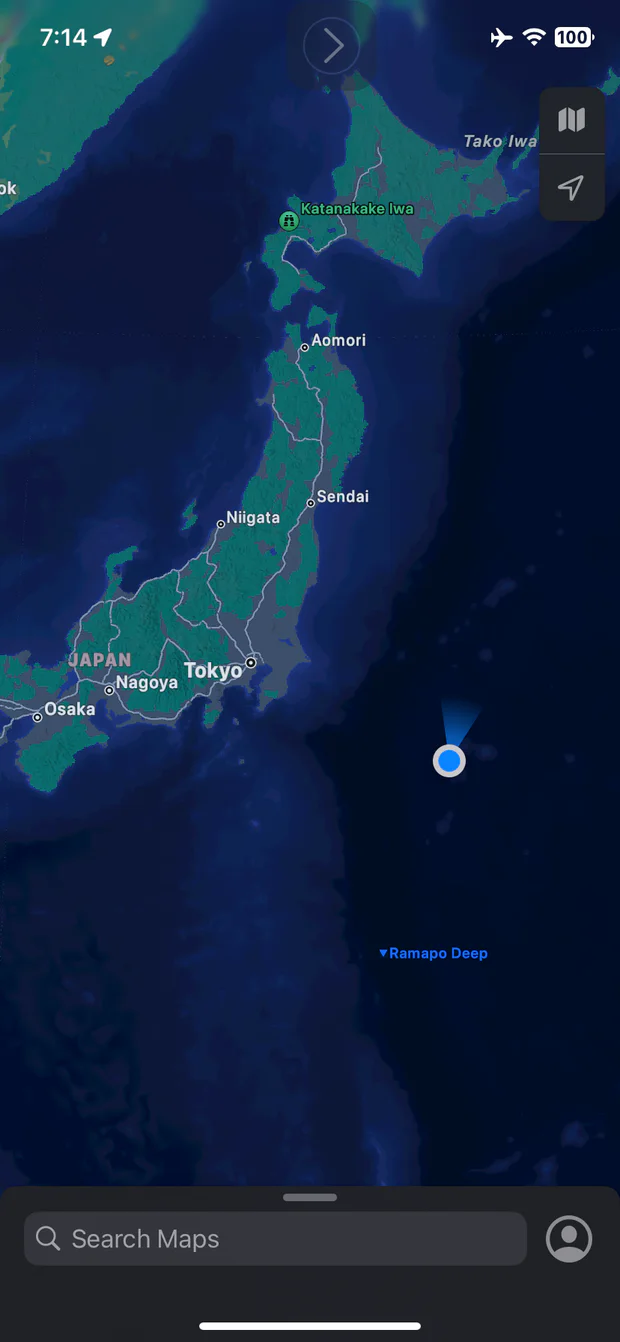
Tokyo Tower · 180 seconds · No card required
WLOC-observedGateway target synced
Tester-confirmedDevice and target-app result
Product architecture
Each layer owns a different responsibility. Passing one layer never silently upgrades the evidence produced by the next.
Sign in, accept the Authorized Testing Policy, select an authorized device, and request one bounded target.
Control requests go to the API Worker. Gateway credentials are never shipped in the client bundle; Profile bytes appear only in an explicit one-time, no-store download response.
The API Worker verifies the session, current policy, workspace membership, entitlement, and mutation safety before any device operation.
D1 is the business source of truth. Tenant and resource scope are checked together instead of fetching first and authorizing later.
A per-device coordinator serializes provision, apply, restore, revoke, and status sync, then schedules the absolute restore deadline.
Restore is priority work. A disabled browser button is never treated as concurrency control.
The Gateway handles the Profile and location execution path for the authorized iPhone. WLOC records the evidence it can observe; the tester checks the device and target app.
Gateway acceptance is not device-online telemetry, and it is not universal target-app confirmation.
The real sequence
WLOC does not compress Profile installation, VPN connection, and device confirmation into an instant-action claim.
Open the dashboard and verify your email.
Read and accept the current acceptable-use policy.
Name a workspace for authorized testing.
Add an iPhone you own or are authorized to test.
Download the configuration profile on the device and install it in Settings.
In iPhone Settings, turn on the WLOC that just appeared. Confirm the result on the device.
Apply the Tokyo Tower diagnostic and confirm the result yourself.
Evidence semantics
WLOC separates control-plane evidence, Gateway observation, and the tester's device check. A green status never stands in for the whole chain.
target_syncedawaiting_confirmationrestore_submittedmanual_confirmationWLOC security boundary
These are first-party product contracts, not certification badges. Each one is backed by a concrete system boundary or recovery rule.
Narrow browser boundary
The browser bundle receives no Gateway bearer token, Access credential, EAP password, or server-side secret. Profile bytes transit only during an explicit one-time, no-store download to the authorized device.
Review the security boundaryMinimized persistence
Profile content and the EAP password pass only through Gateway and the one-time response stream. WLOC does not retain them in D1, KV, R2, Durable Objects, Queues, product analytics, structured application logs, browser-side storage, or fixtures.
Read the Profile guideRecovery contract
Restore, Revoke, and Emergency Stop remain reachable under unpaid, refunded, frozen, restricted, and pending-deletion states. Gateway readback and final device confirmation remain separate.
See the recovery contractResearch evidence · Source scope
These sources explain different layers of the system model. None certifies WLOC, turns a private path into a public Apple API, or guarantees that every app will adopt the same result.
Current Apple documentation
Apple documents cellular, Wi-Fi, GPS, and Bluetooth as inputs to Location Services, with access controlled per app.
Historical primary source · 2010
Apple's archived response to U.S. Representatives Markey and Barton described the Wi-Fi and cellular location flow used at that time.
Peer-reviewed research · IEEE S&P 2024
Rye and Levin analyze BSSIDs as positioning landmarks, Apple WPS behavior, and the privacy risks of large-scale querying.
Independent reverse engineering · public code
The public apple-corelocation-experiments repository documents /clls/wloc, protobuf framing, and one observed result after rerouting a WPS response.
Straight answers
The most important limits, without hiding implementation reality behind marketing shorthand.
No. WLOC works with a bounded network-location response path. It does not write to the GPS receiver or globally override Core Location.
No. Target synced means the Gateway accepted and stored the requested target. Device reachability and the target-app result are separate observations.
They pass through the Gateway and an explicit one-time, no-store download response. WLOC does not retain them in browser-side storage, D1, KV, R2, Durable Objects, queues, structured application logs, analytics, or fixtures.
Restore starts with a Gateway command and pass-through readback. WLOC reports that separately from the tester's final check of the device and target app; it never turns a submitted command into an automatic device-restored claim.
iOS may combine GPS, Wi-Fi, cellular, and Bluetooth, while each app controls permission, cache, account, server, and risk logic. WLOC only claims the layer it can prepare and observe.
Start with a public location
Run the fixed Tokyo Tower diagnostic, inspect each evidence layer, then complete the recovery check on the authorized device.